

These communities offer a window into search experimentation—but learning from them requires evidence, restraint and critical thinking.
Search engine optimisation is usually presented as a predictable process: research keywords, create useful content, improve the website and earn relevant links. Yet search results do not always behave predictably. Pages disappear, new competitors rise quickly and strategies that once worked lose their effect.
This uncertainty leads some marketers to a Black Hat SEO Forum, where people openly discuss the experimental side of search. The attraction is understandable. These communities appear to offer information that conventional courses and marketing blogs avoid.
But access to unusual ideas is not the same as access to reliable knowledge.
The Appeal of Unfiltered Discussion
Traditional SEO content is often carefully edited and published after a strategy has become widely known. Forum conversations happen more quickly. Members may discuss ranking changes, indexing delays, automation tools, expired domains and unusual backlink patterns while they are still testing them.
The informal format can expose readers to diverse viewpoints. One member may report a quick improvement, while another explains why the same approach failed. Reading both accounts can be more educational than reading a polished success story.
The weakness is that anyone can make a claim. Authority on a forum is not always supported by verifiable experience.
Why Success Stories Can Be Misleading
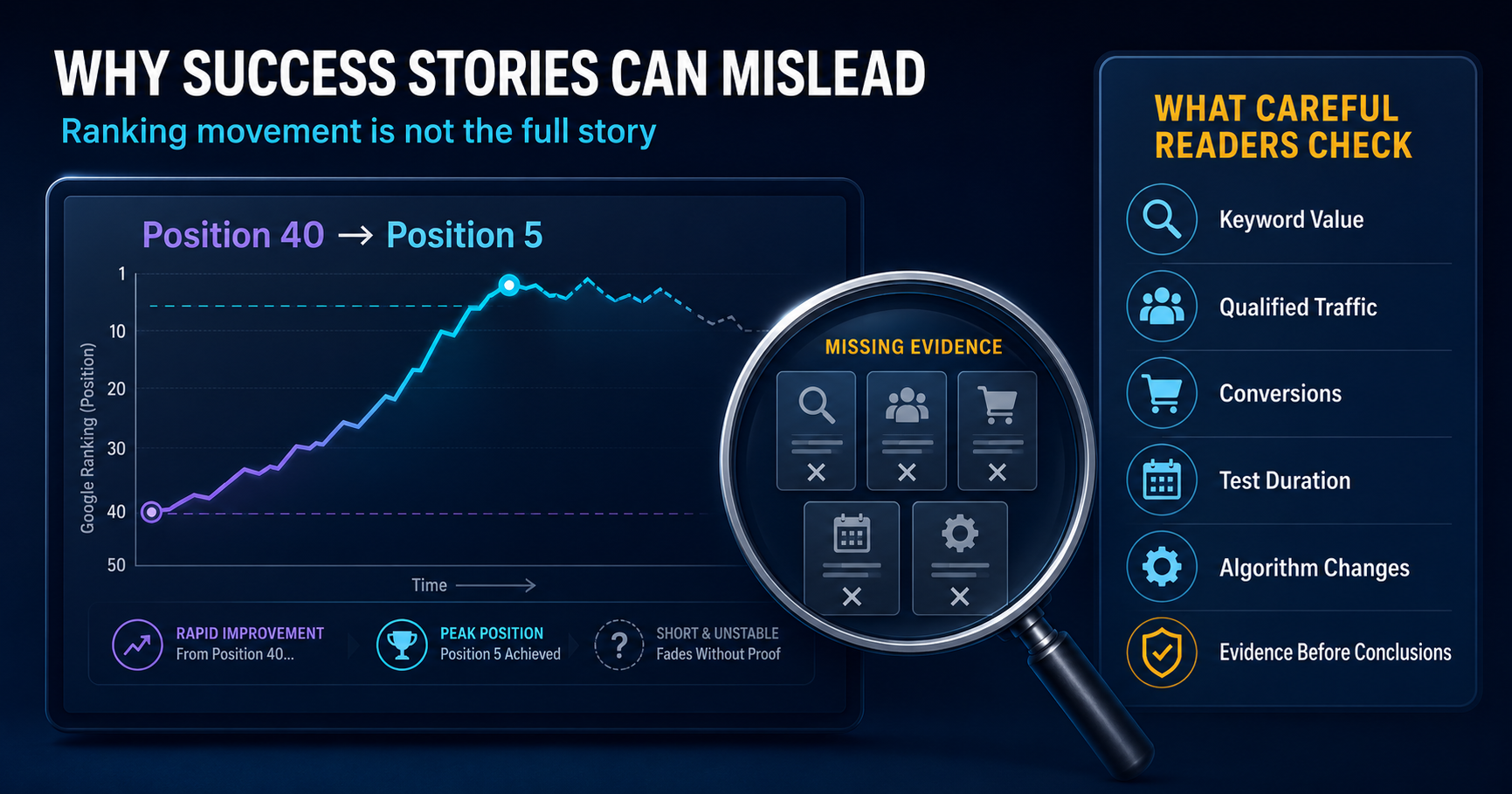
A typical case study might show that a page moved from position 40 to position five. That sounds impressive, but important details may be missing.
Was the keyword commercially valuable? Did the page attract qualified visitors? Was the improvement caused by the technique being discussed, or did a technical correction, competitor change or algorithm update influence the result?
Duration matters as well. A ranking that lasts five days should not be judged in the same way as visibility that continues for a year.
A useful Black Hat SEO Forum discussion should therefore be read as a hypothesis, not a proven formula. Screenshots can support a claim, but they cannot establish cause on their own.
What Careful Readers Look For
Credible experiments normally include a clear starting point, a defined change and enough time to observe the outcome. The author should acknowledge other factors that could have influenced the result.
Readers should look for details such as:
- The approximate age and condition of the website
- The type of search query being targeted
- Traffic or impression data before the change
- The exact period during which results were monitored
- Unexpected outcomes and limitations
- Follow-up updates after the initial ranking movement
A person who openly explains uncertainty is often more trustworthy than someone promising a guaranteed result.
Learning Without Crossing the Line
Understanding aggressive SEO does not require applying it to a client’s website. Some discussions can help professionals recognise link spam, copied content, hacked pages, artificial engagement and other threats.
Testing should take place only on websites that the participant owns or is authorised to manage. Accessing another system without permission, manufacturing deceptive signals or hiding material risks from a client is not responsible experimentation.
Established businesses have more than rankings to protect. They also depend on customer confidence, brand reputation and stable revenue. A temporary increase in visibility may be a poor trade if the method creates a lasting liability.
The Difference Between Curiosity and Dependence
A forum is most valuable when it encourages further investigation. It becomes dangerous when readers depend on it for shortcuts.
Algorithms change, tools disappear and loopholes close. The ability to question evidence lasts longer than any individual tactic. Instead of asking only, “Does this work?”, a stronger set of questions is:
- Why might it have worked?
- What else could explain the result?
- How long did the benefit continue?
- What was the commercial outcome?
- What could happen if the test failed?
These questions turn forum browsing into critical research.
A Window, Not a Roadmap
A Black Hat SEO Forum offers a view into the uncertain and experimental edges of search marketing. It can reveal emerging conversations, failed tests and risks that conventional guides sometimes overlook.
Its value, however, depends on the reader. Those looking for guaranteed shortcuts are likely to find exaggerated promises. Those willing to compare evidence, respect permission boundaries and examine long-term consequences may develop a more realistic understanding of search.
The wisest lesson these communities offer is not how to manipulate a ranking. It is how easily incomplete evidence can be mistaken for certainty